
The Capture of Maduro Presents Complex Juridical Issues, within US and Overseas.

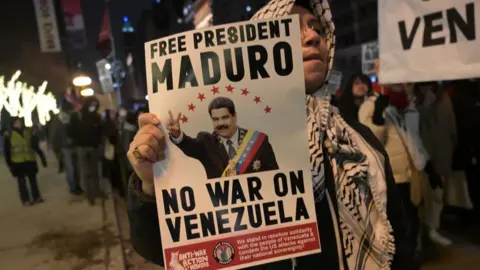
On Monday morning, a handcuffed, prison-uniform-wearing Nicolás Maduro disembarked from a armed forces helicopter in Manhattan, flanked by armed federal agents.
The Caracas chief had spent the night in a well-known federal facility in Brooklyn, prior to authorities moved him to a Manhattan court to face criminal charges.
The Attorney General has asserted Maduro was brought to the US to "stand trial".
But international law experts doubt the lawfulness of the administration's maneuver, and maintain the US may have violated established norms regulating the military intervention. Under American law, however, the US's actions fall into a legal grey area that may nevertheless result in Maduro standing trial, despite the events that led to his presence.
The US maintains its actions were permissible under statute. The executive branch has accused Maduro of "narco-trafficking terrorism" and abetting the shipment of "thousands of tonnes" of narcotics to the US.
"The entire team conducted themselves with utmost professionalism, decisively, and in strict accordance with US law and established protocols," the top legal official said in a statement.
Maduro has long denied US allegations that he manages an narco-trafficking scheme, and in the federal courthouse in New York on Monday he pled of innocent.
International Legal and Enforcement Concerns
While the charges are focused on drugs, the US pursuit of Maduro is the culmination of years of criticism of his leadership of Venezuela from the wider international community.
In 2020, UN inquiry officials said Maduro's government had committed "grave abuses" that were international crimes - and that the president and other senior figures were implicated. The US and some of its partners have also accused Maduro of manipulating votes, and withheld recognition of him as the rightful leader.
Maduro's alleged ties with criminal syndicates are the centerpiece of this indictment, yet the US methods in putting him before a US judge to answer these charges are also facing review.
Conducting a armed incursion in Venezuela and spiriting Maduro out of the country under the cover of darkness was "completely illegal under international law," said a professor at a law school.
Experts cited a host of issues stemming from the US operation.
The founding UN document prohibits members from the threat or use of force against other nations. It authorizes "self-defence if an armed attack occurs" but that danger must be looming, experts said. The other allowance occurs when the UN Security Council authorizes such an intervention, which the US lacked before it acted in Venezuela.
International law would consider the illicit narcotics allegations the US accuses against Maduro to be a criminal justice issue, experts say, not a act of war that might warrant one country to take covert force against another.
In official remarks, the government has characterised the operation as, in the words of the foreign affairs chief, "essentially a criminal apprehension", rather than an act of war.
Precedent and US Jurisdictional Questions
Maduro has been indicted on narco-terrorism counts in the US since 2020; the justice department has now issued a updated - or amended - formal accusation against the South American president. The executive branch argues it is now carrying it out.
"The action was conducted to aid an active legal case related to large-scale drug smuggling and associated crimes that have spurred conflict, destabilised the region, and been a direct cause of the drug crisis causing fatalities in the US," the Attorney General said in her remarks.
But since the mission, several legal experts have said the US violated global norms by taking Maduro out of Venezuela without consent.
"A country cannot go into another foreign country and detain individuals," said an professor of international criminal law. "In the event that the US wants to arrest someone in another country, the proper way to do that is a legal process."
Regardless of whether an defendant faces indictment in America, "The US has no legal standing to operate internationally serving an detention order in the jurisdiction of other sovereign states," she said.
Maduro's lawyers in court on Monday said they would dispute the lawfulness of the US action which took him from Caracas to New York.
There's also a long-running scholarly argument about whether presidents must follow the UN Charter. The US Constitution views international agreements the country signs to be the "binding legal authority".
But there's a clear historic example of a former executive claiming it did not have to observe the charter.
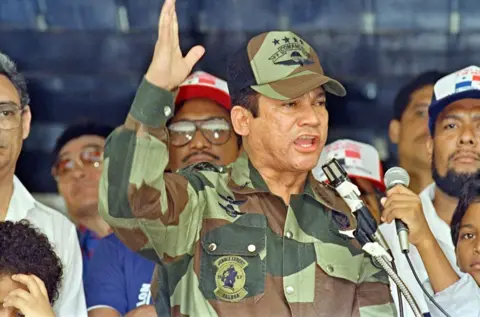
In 1989, the George HW Bush administration captured Panama's strongman Manuel Noriega and extradited him to the US to answer drug trafficking charges.
An restricted Justice Department memo from the time stated that the president had the constitutional power to order the FBI to arrest individuals who violated US law, "even if those actions violate customary international law" - including the UN Charter.
The draftsman of that memo, William Barr, was appointed the US attorney general and brought the first 2020 accusation against Maduro.
However, the memo's logic later came under scrutiny from academics. US courts have not directly ruled on the issue.
US Executive Authority and Legal Control
In the US, the issue of whether this operation broke any US statutes is multifaceted.
The US Constitution gives Congress the prerogative to declare war, but makes the president in command of the armed forces.
A War Powers Resolution called the War Powers Resolution imposes constraints on the president's authority to use armed force. It mandates the president to consult Congress before deploying US troops overseas "in every possible instance," and notify Congress within 48 hours of committing troops.
The administration did not give Congress a prior warning before the operation in Venezuela "to ensure its success," a cabinet member said.
However, several {presidents|commanders