
Fresh High Court Docket Poised to Reshape Presidential Powers

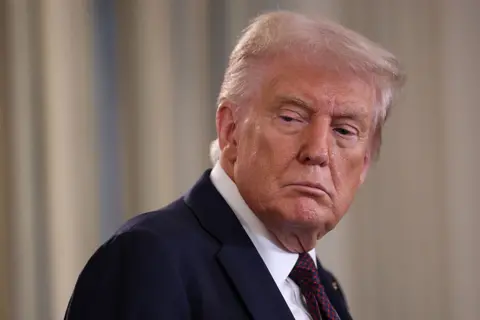
Our nation's highest court starts its new term on Monday with a docket already packed with likely important disputes that may establish the extent of executive executive power – and the possibility of further matters to come.
During the past several months after Trump came back to the executive branch, he has challenged the constraints of executive power, solely introducing new policies, slashing federal budgets and workforce, and attempting to place once self-governing institutions closer subject to his oversight.
Judicial Conflicts Concerning State Troops Use
A recent developing legal battle originates in the administration's efforts to take control of state National Guard units and dispatch them in urban areas where he asserts there is social turmoil and widespread lawlessness – despite the opposition of municipal leaders.
In Oregon, a US judge has issued directives halting the administration's mobilization of military personnel to that region. An higher court is scheduled to examine the decision in the coming days.
"We live in a land of judicial rules, not army control," Judge Karin Immergut, who Trump nominated to the bench in his initial presidency, wrote in her recent opinion.
"Government lawyers have presented a series of arguments that, if upheld, endanger blurring the distinction between civilian and military federal power – to the detriment of this country."
Shadow Docket Could Determine Troop Authority
When the appeals court has its say, the High Court may get involved via its often termed "shadow docket", delivering a judgment that may restrict executive authority to use the armed forces on US soil – conversely provide him a wide discretion, at least short term.
Such reviews have become a more routine phenomenon recently, as a larger part of the judicial panel, in reaction to urgent requests from the Trump administration, has mostly permitted the administration's actions to move forward while court cases play out.
"An ongoing struggle between the Supreme Court and the trial courts is poised to become a driving force in the upcoming session," an expert, a academic at the Chicago law school, remarked at a briefing last month.
Criticism About Emergency Review
Judicial reliance on the expedited system has been challenged by liberal legal scholars and leaders as an inappropriate exercise of the judicial power. Its decisions have often been concise, providing minimal explanations and providing trial court judges with little direction.
"Every citizen must be concerned by the justices' increasing use on its shadow docket to decide controversial and high-profile disputes without any form of clarity – without substantive explanations, courtroom debates, or reasoning," Politician the New Jersey senator of his constituency commented in recent months.
"It more drives the judiciary's discussions and judgments away from civil examination and shields it from answerability."
Complete Hearings Coming
During the upcoming session, nevertheless, the justices is set to tackle matters of executive authority – along with additional prominent controversies – head on, holding oral arguments and issuing comprehensive decisions on their basis.
"The court is unable to have the option to brief rulings that omit the rationale," stated Maya Sen, a expert at the prestigious institution who specialises in the Supreme Court and political affairs. "If they're planning to grant greater authority to the president the court is going to have to explain the reason."
Key Cases on the Docket
The court is already scheduled to review if national statutes that forbid the president from firing personnel of bodies created by the legislature to be self-governing from presidential influence violate executive authority.
Judicial panel will additionally consider appeals in an fast-tracked process of the administration's effort to remove an economic official from her position as a member on the key monetary authority – a case that could substantially enhance the president's authority over American economic policy.
The nation's – along with international economy – is additionally a key focus as court members will have a chance to rule whether many of the President's unilaterally imposed taxes on foreign imports have sufficient legal authority or ought to be voided.
Judicial panel may also consider the administration's moves to solely slash public funds and fire junior government employees, as well as his forceful immigration and deportation policies.
While the court has not yet consented to consider Trump's effort to end natural-born status for those given birth on {US soil|American territory|domestic grounds